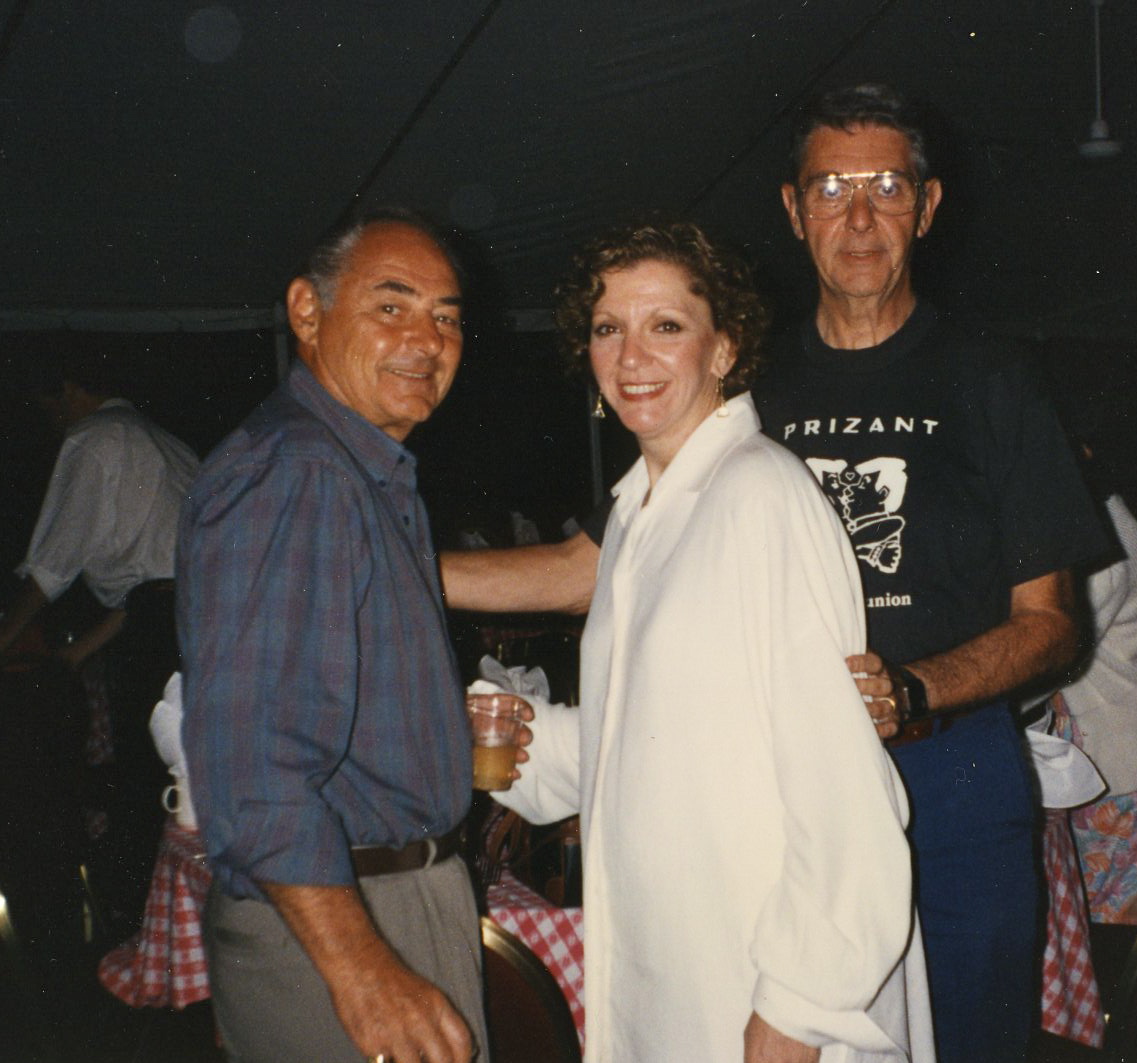
Sunday, February 20, 2011

The Accidental Potter

I was sent off to summer camps a few times when I was a kid. (kicking and screaming I may add. I did not like summer camps.) Anyway, I was perhaps seven or eight years old the first time. I was there two days and caught chicken pox -- an epidemic at the camp. My parents, to make things worse, came to visit me - through a window in the cabin called "The Chicken Coop." (any wonder I decided I hated summer camp from then on?) Once out of the "coop," the only activities I remember are the dance classes and the crafts cabin. I worked in clay for the first time, and I sculpted a bird. That's what it began to look like so I went with it. I remember that it was surprisingly good. The counselor in charge said we could pick up our work the last day of camp. The bus waiting, I hurried to the crafts cabin. I stood in the doorway unseen by the counselor, who was packing her bag. I saw my bird sculpture being wrapped in paper and put in her bag. I knocked, and asked for my bird. She did a very bad acting job when she told me it had broken in the kiln. I told her that I was sure she was mistaken; the bird was in her bag. She became rude and verbally kicked me out. I hope to this day that it broke in her bag before she made it home.

All of that to describe my first encounter with clay. When my kids were little we'd play together making things from clay. I'd make baker's clay for them (the stuff made with flour and salt -- remember?). And we'd create a plethora of sugar cookies over the years in magical shapes and designs. The first piece of art I ever purchased was in Pittsburgh when my boys were very young and we were very poor. We went to a craft fair and I bought (for $7.50 - quite a sum back then) a wheel-thrown bowl. I have always loved that bowl; I haven't had the opportunity or where-withal to buy many pieces of art since then. Happily, the bowl remains in tact even after a life-time of moving from place to place like some sort of gypsy.

And then one day, I met a charming lady who introduced me to her pottery teacher who had a place in her class which was held in her basement. The love affair began: me on a kick-wheel; for over five years, every Wednesday night! Her name was Sandy Lenz; she was a fine potter and a good teacher. When I look at the pieces I created those years (well, the ones I didn't give away) I wonder whether I was actually quite adequate or whether my teacher's hands were all over the work. In any case, the society of the small class, the camaraderie, and the total involvement the clay provided albeit the pieces one took home: all of this wonderful adventure stopped for years and years. When I moved to the New York area in 2002, my son gave me a great birthday gift: a series of classes at a pottery studio near my workplace. I went there with so much hope and spirit only to find a totally unfriendly environment, a teacher who didn't teach -- didn't even look at what was being done. And while my head remembered everything, my hands did not. In fairness, the wheel was electric. I had learned on the kick wheel; a totality of experience. An almost dance -- a complete concentration. But at the New York studio my work looked like a very young child had an accident with some clay. When the series ended, I gave the craft up as a part of yesterday.

This past fall I walked into a charming shop in Beverly, MA where I live, called "Clay Dreaming." A street away from my apartment. How lucky is that?! Some excellent work was exhibited for sale; a lovely space was set aside for folks to paint greenware with glazes. Once fired a nice piece of pottery was wrapped to take home. And then there was this large room with 10 or 12 potters wheels. I had been laid off from my job; I was feeling rather depressed after months of applying for work to no avail. And, like Alice, I saw a door to an adventure I sorely needed -- if I could only make myself fit through. I managed it; found my box of pottery tools still in tact; showed up for class.

My head still remembers it all. Well, most of it. My hands do not always cooperate. The society is there -- chatty, friendly, supportive. The teacher wants very much for each of us to succeed in the way we want for ourselves. When I put the clay on the wheel I sometimes know what I want to create (usually a nice, large bowl) but the clay seems to have objectives of its own. If I don't take command I either wind up with a failed attempt or with something I had no intention of making. Thinking about this, it seems that the same scenario plays out quite often in my life. (yours, too?) When I started my little theatre school (a lifetime ago) I meant it to be a place for children to learn about acting and theatre. Most of my students were adults and young adults. There was a class of youngsters, but mainly the school had attracted grown-ups who had always wanted to be part of the theatre. I never intended to do shows for audiences, but the needs of the students and apparently for me led to a small repertory company and a traveling children's participatory company. One of my former students told me years later that "it was magic." Well, it was hard work, but certainly the outcome was always magical.

There's a saying in Yiddish (my grandma Jennie always quoted) "Men plan; God laughs." I've given the universe much to laugh about. But I no longer fight it. I go each Tuesday evening to see what the clay has in store for me. I don't turn out the quantity of work that my classmates accomplish. But I have to believe the clay will listen to me more and more as I continue the adventure. And if not, I will permit it to surprise me, until one day I surprise myself.


Friday, January 21, 2011

A Love Letter To My Days

It was a long, boring drive, radio reception was sketchy, and for some inexplicable reason I played with multiplying how many days I had so far lived. It took me a while - I don't calculate well without paper and pencil (adding machine?). And the final number was daunting (if even accurate.) I then took myself back as far as my memory would permit, and attempted to recall as many individual days as I could. Of course I came up with pieces of days, patterns of kinds of days; the very happy ones; the very sad ones. It was a mind-boggling exercise. I reminded myself of Emily in Our Town -- although she was already dead when she attempted to re-live a day gone by.

I have long ago dealt with and disassembled all regrets. So I certainly wasn't voyaging toward self-pity. I have not however, discovered the why of many of my behaviors, choices, actions -- the attainments as well as the flops. I didn't discover any reasons on that car trip either. I recalled the Brooklyn era; the awful growing up years. Hiding in my room; hiding in books; finding my freedom only in my dance classes. The Pittsburgh days at Carnegie Tech. The friendships made there; learning to be a friend; to accept friendship. More valuable ultimately than the classes, the training. The teenage thing of falling in love -- I believe we did it for practice. There'd be a song that resonated with me in some odd way. When I heard it I felt the longing. But one has to be longing for something -- someone. So I (like all the teenage girls I've ever known) would choose an object -- a victim -- for all that death-defying emotion. It worked much better if the focus of this passion was rarely seen, if actually known. One of my older brother's friends always away at college; my cousin Shelly who lived in Chicago (he really was wonderful!); a girlfriend's boyfriend; the guy who flipped pizzas in the window of a local caffe; an acting teacher; several acting teachers. On and on. Harmless. It provided continual improvisation enabling habitation in a fantasy world.

The day I won the National High School Poetry Competition. The day Miss MacDonald at P.S. 99 recognized me as a writer. The day the little girls I was teaching at summer camp performed to a standing ovation. The fearful days; the fearless days. The triumphs -- small and huge. The day my mother gave me the kitchen so I could bake mountains of cookies. I'd carry each tray through the swinging door to the dining room and deposit the lovelies on a platter. All day -- for hours and hours; dozens and dozens of cookies. When at last I brought in the last tray, there was only a small platter with any cookies on it. My brothers had spent the day eating them all! I was crushed. And thinking back on it, my mother was an un-professed culprit: sitting there knitting and watching them carry on. Nice. Actually, I still don't find it funny. The days with my kids when they were kids. My first garden. Every garden. The remarkable awakening, trembling, when my plays or poetry spoke back to me. The days of our "Piece of Time" weekend; when my family traveled into Boston to see the production of my play, "A Piece of Time" mounted by the New Ehrlich Theatre Company. The day when I received a letter telling me that one of my children's books would be published. And then it wasn't because the company went out of business. Venice. Barbados. Waiting in line for half a day with my son, under umbrellas, to get tickets to Shakespeare in the Park. What fun we had! Going to L.A. when my screenplay was a finalist in the LA Femme Film Festival. Directing any play. Reuniting with Lloyd after 25 years. The days that could have used changing. The days I wouldn't change for anything even if the consequences might positively alter my life.

They are my days. So is the one I'm enjoying now. Sitting in my kitchen; shivering a bit because it's terribly cold outside and the wind leaning against the windows prevents real warmth in the room. I spent the morning at my part-time day job; processing quarterly reports. I made steel-cut oatmeal for lunch - not the instant kind. I'm drinking warmed over coffee, and will soon venture out to attend my one to one class at the Apple Store. And this evening I endeavor to finish the Donna Leon book that I'm reading, in time to watch THE MENTALIST on the tv. No big deal you say? It is my day. And my time travel has confirmed my belief that each day is the first and also the last. It is all. Not my intention to stir up philosophical warfare. It is what I believe. And I also believe that Emily would agree with me.

(Photos below: a lighthouse in Norfolk; with Zoe and Isobel; with my brother Lenny; with Alex; with Jamie; with Pete; with Lloyd; a reunion with Al; my Clea; with Katy;with DJ;with Keira; with cousin Shelly and brother Matt; when the kids were kids; Coburn family reunion; Jamie in Venice - the trip Pete gave us.)


Friday, November 26, 2010

The Jewish Santa of Philadelphia

This is apparently an oxymoron; it is also a true tale of a very unusual man. He was my mother's second husband, after the death of my father. I need to go back a bit -- I'll make every attempt to keep it brief.
My maternal grandmother, Jennie, (you met her in earlier blogs) had an extensive family in various parts of Europe. The Mednicki part of the family that came to Philadelphia changed their surname to Mednick. Boris Mednick was a photographer; Boris's brother lived in Belgium where he and his family were when the Nazi's arrived on the scene. Bernard, Boris's nephew, had a son and daughter; he and his wife took the children and ran for it. Bernard joined the resistance and hid his family in the countryside. That journey is a book on its own. Suffice it to say that they survived the war, losing too many close relatives. The Philadelphia family located him and brought Bernard, his wife and children (three at this juncture) to the States. They put them up in an apartment, and there they were. We lived in Brooklyn. My dad's parents had a great old house in Rockaway Beach where folks from the city would come for weekends or weeks in the summers. Under the house was a shop, a "candy store" as it was called back in the day. (Dad had worked the shop to send himself to college.) Word reached my parents that Bernard and his family were struggling. So he helped them come out to Rockaway for a summer, promising them a lot of hard work, cramped quarters behind the store, but a profit in cash and goods that would get through the winter.
And so it was. Dad even helped Bernard locate his nephew and two nieces whose parents were killed in the war, and they brought the youngsters to Rockaway. And Dad helped in the shop on weekends. My dad kept his promise. And Bernard, whom the family called "Frenchy," did pretty well, and remained a fond cousin of our family.
Four years after my father's death at fifty years old, and the death of Bernard's wife, Bernard came to visit my mom and subsequently they were married. They lived a number of years in the Brooklyn house and then sold it and moved to Philadelphia. Bernard was not very tall, but he was broad and had grown a full white beard. I don't know how it exactly happened, but he was asked by a local school I think to play Santa for the children. Now, why would an aging Jew decide to be Santa? I believe that, in great part, it was because he loved being the center of attention. He actually was an extra in some movies and did some print work as well. Well, playing Santa turned into an annual event, with other organizations joining in. He was given his very own Santa outfit, and soon was riding in parades.
We called him Bonpapa. He was my children's grandpa -- my kids never knew my dad. All the children thought it a hoot that he was Santa Claus. One summer, while he and mom were visiting with us in Beverly, Massachusetts, we went to spend some time on the beach at Lynch Park. Mom sat under an umbrella. Bonpapa had my sons dig a hole in the sand, large enough for him to sit at the edge with his feet in the hole which the boys filled with water to keep him cool. Bonpapa was reading a book; just sitting there with his feet in his little water well, wearing his bathing suit and sun glasses. Mom and I looked up to see a long queue of children very quietly and patiently waiting for "Santa" to see them. I called to him. Discovering the eager flock, he took a pencil from behind his ear and began to write down their Christmas lists as they one at a time related their wishes to him. I regret to say none of us had a camera. He was, as you see from included pictures, very convincing -- even in August, without any costume at all.
He was then the age I am now, which simply doesn't seem possible. He was not a religious man, but his Jewish identity was as important to him as his Belgian/French heritage. But being able to impress the kids at Christmas, to listen to their secret desires, to hear the cheers when he rode into town, to visit the hospitals where he personified all of their Christmas celebration -- well, this was not a contradiction.
When my mom passed away, Bonpapa walked out of our lives and stopped being Santa as well. But I dare say that there are several generations of Philadelphians who will not forget the "real" Santa who had a French accent and sang songs to them in Yiddish. Gotta love it!!
Enjoy the festive season and let your memories keep you warm.

Saturday, November 6, 2010

Notes from the Ice Floe

I rather expect that the repugnant custom in times of distress of putting old folks out on a sheet of ice to die is no longer practiced. (Given the atrocities human beings still commit upon each other in greed and rage, it wouldn't be so much a surprise if senicide still exists.) Of course I'm using it as a metaphor. Because people of a certain age (a changeable number for sure, depending on who's talking) are often put on ice as it were. I've experienced it in the job (or jobless) market. Here, one can doctor one's resume and leave off all numbers. In the interview, one needs also to avoid discussing the ages of one's kids or mention grandkids. One also has to spend a good deal of energy to avoid looking anything over sixty. None of this easy. Wear gloves!

So where does it not matter, one's age? In the Arts, you say. Actors of a certain age, especially women, will tell you that unless you're already a star the rare role will be reserved for that performer who is a star. Directors, writers, musicians, visual artists -- if you have made it you're set. No one doubts your talents or your mental powers or your creative prowess. If, however, you're still striving or starting out be prepared to be perceived as old. With all the negative attributes relegated to old age. A number of years ago there was a foundation that gave fellowships to women over 55 years of age for proposals of creative projects. It was very competitive, of course. I entered often. And although I never won, it was a possibility. A great many artistic competitions are designated for "early career" artists. Why can't an "early career" begin a bit late? I went to the film festival when my screenplay was a finalist. It would have been difficult there to find a participant or staff member over the age of thirty. I was the anomaly.

I suppose there is a judgment factor: if you haven't made it by now you never will! So what does this made it mean? New York Times best seller list? Broadway production? Symphony Hall? Paintings selling for over-the-top prices? Universal name recognition? And why is it ever too late? Oh, and the other weird situation I've experienced: if I were, for example, a Broadway director and offered to direct at a community theater, it would be a coup. If I come in with a solid resume of experience in regionals, it is scary. If my plays were published by a traditional publisher, that's something. If published by an unknown quantity: not so much. HOWEVER, if you can find my books on Amazon -- aha! that's something else!

I am probably ranting which wasn't my intention. I am finding it difficult to find even folks of my own age who believe in limitless possibilities. And I know that time is indeed a factor. More so than ever. But in my silly head I keep hearing Stephen Sondheim in that fabulous radio interview on his 80th birthday: "In my mind I am sixteen and I have promise." Me, too.


Saturday, September 18, 2010

Got God???


It would have been much more simple if I'd just gone along with the way things were. My dad would insist that was the way it was meant to be. But I was the way I was meant to be as well. The best of our home were the holidays. The traditional foods, decorations, blessings -- I loved all of that. And then we'd walk the short way to the synagogue -- the orthodox synagogue where my father worshipped. Women didn't sit with the men; our seats were in the balconies that lined the sides and the rear of the sanctuary. I did not like this very much; not being a part of it. (If you know me or have been following my blog I imagine you'd expect me to feel that way.) Some of the women prayed; many whispered to each other. Most sat and listened without understanding the Hebrew service. I was also sent to Hebrew school after public school several days a week, where the teachers were ill prepared to educate girls. We were supposed to be home learning to prepare gefilte fish. The boys would reach 13 years old, celebrate their bar mitzvah, and join the congregation. There was no such ceremony for the girls in the orthodoxy. When I was almost 16 I begged my dad to permit me to stop going to the classes. The teachers really didn't know what to do with me at that point, and it was past time to "self-graduate." He laughed and scratched his head, as he always did when faced with a conundrum. We talked once about my discomfort with the synagogue. He reminded me that in "our Father's world" one can prayer anywhere. I chose the beach; the sea. That became, in more than one way, my sanctuary.

Our home was not orthodox. And somehow I received a much more liberal message than was sent. Or I wasn't listening to any but my own voice. I married a classmate from college who was, of course, not Jewish. My dad was not a happy man. He argued with the rabbi who would perform the ceremony for weeks before the wedding. He attended under duress. It was a small gathering. My dad died a month to the day after my wedding from a post-operational embolism. My mother insisted it was my fault; I had caused so much stress by marrying the guy I was in love with. That was a load to carry around.

Years later, with three kids and a great old house two blocks from the ocean, I accepted a job at the local temple (a conservative synagogue) teaching "Yiddishkeit" to the kindergarten children. Yiddishkeit is the culture of Judaism: the music, the calendar, the life. The part of my up-bringing that I loved the most. I taught at the temple for nine years. With my husband's christmas trees, and the easter bunnies, and a deeply growing spiritualism that would eventually sustain me. We were part of a community. Several actually: the folks from the university where my husband taught; the neighbors of many faiths; the people from the temple. When my first son and later my second son were ready to be bar mitzvah, I fought and won the battle to sit beside him, to be called to the Torah, -- all honors typically given only to men. We changed the congregation forever. Then our visionary rabbi was forced out of his job. His replacement fired me. By that time I was teaching classes at many levels, including a post-confirmation class on Sunday mornings. I called it "In Search of Questions;" we listened to and spoke with interesting folks in our community and then, after the guests would leave, we'd discuss the conversation. A young woman from the community was engaged to a Chinese/Irish young man. They came to share their struggles with the class. When they left, the students addressed what would happen if they brought home the equivalent of this young man. Hell-fire and damnation; parents in mourning; a fairly unanimous nightmare. My oldest son was in the class. The others insisted he say what would happen in his home. His answer was, "My mom would take a crash-course in Chinese cooking." This got back to the new rabbi and I lost my job.

Worse than that was being called into the Hebrew School a few months later to be told to remove my adopted, transracial, Jewish daughter from the school. "She doesn't belong here." She couldn't learn the Hebrew language; she didn't have to. I wanted her to have that community.
None of this was the teachings of any God I could ever believe in. I truly believe that God didn't enter into it at all. The people in authority there hadn't discovered God yet.

Through the years we celebrated the holidays our own way -- with joy, love, and sharing of both. We celebrated the Jewish holidays, forgoing the synagogue and taking our prayers and thanks to the sea instead. We celebrated Christmas Tree, and easter bunny and the solstice and the equinox. We celebrated the harvests and all the seasons. We gave thanks for all of it and for each other. I think my mom probably thought me a heathen; I never tried to explain to her what she was poised to reject. That God for me was the universe and the energy it created that answered the energy we created. All that is good in the universe and in people -- that's what we are always thankful for. And all faiths -- calling this great and beautiful force by various names -- at their essence want the same things: peace, love, acceptance.

All of this brought on by the advent of the holy days. Happy autumn equinox; happy turning of the wheel; happy, happy new year.

Monday, September 6, 2010

Ode to the Morning Mile

Sunday morning. A cooling breeze seems like advance notice that autumn will arrive in two weeks. I am inspired to get out this morning at 7:30 -- well, to be honest it wasn't the glorious sunshine or the lovely breeze. It was my bathroom scale giving me notice that I'd gained #@$%&**! pounds without even trying. So I took off toward the ocean intentionally leaving my iPod on the kitchen table. The sound of the sea mixing with the rustling of the leaves -- like a taffeta skirt -- well, that's perfect music.

I walked with the dog walkers; the dogs attempt to grab my ankle. The walkers nod a greeting. All the morning walkers without four legged companions, however, do not fail to say "good morning" or "hello" or the like. At any other time of day (except an occasional evening) no one who passes you on these streets will say "hey" to you. The younger exercisers run by; older exercisers hold hands, and stop along their way to peer at houses or literally smell the flowers. Nice. Older though I be, I try to keep pace with a memory of a 15 minute mile. I was in my 40's then. Earlier than that I'd run/jog. I wasn't awfully good at it -- the running thing. Oh, I did okay on a tread mill; on the street I'd look like Groucho Marx half way home. These days I am lucky to have a delightful walking partner a few evenings a week. Paulette and I keep a comfortable pace, and usually walk the prescribed 30 minutes -- often an hour. I believe I walk faster when I'm alone; perhaps I can't walk and talk at the same time. But it's great fun to talk with Paulette. And to laugh. A morning walk will have to be an "also" not an "instead of."

I pass Lynch Park; here there is lots of green and a playground for the kids; two beach areas; an amphi-theatre, and a round about walk with great views of the ocean.
But I'm heading for the lighthouse a bit further on. All of this is the best of the town I live in. I'd say "now," but really it is "again." We had a great old house here "back in the day." It required lots of love and we happily gave it all we could. We lived in it for 13 years; I had to sell it then. I moved my family to Brookline, MA where -- after a year and a half of difficulty -- I was hired to be the Artistic Director of a children's theater company. We lived in Brookline for six years in two different apartments. Then I moved to an attic in Jamaica Plain. At this point I was living alone. Huge adjustment. I was in J.P. for 9 years. I got very lucky and found a sweet apartment back in Beverly where we'd had our house. I lived there for 4 years; commuting to my job in Boston (the theater job had run its course). So that was a new experience, traveling with the commuters every day. In February of 2002, I moved to Fort Lee, NJ, and, after several really trying months, I got a job in Manhattan. I won't go into the circumstances of why and how I moved to New Jersey, or why and how I moved back to Beverly in the summer of 2006. Typing it here, all this moving around really sounds like the marathon it was. But Beverly holds a good deal of history for me and memories of the happy days raising my kids and creating/operating my own theatre company. And it is a coastal town with wonderful views of the ocean.

I walk back the same way I came. It's Labor Day weekend and folks who live close to the ocean are packing their cars to spend the weekend at other places close to the ocean. The various floatation devices being tossed into suvs are a dead give-away. A car with New Hampshire plates is unpacking enough equipment to camp out for a weekend, never mind the day. Grills, coolers, baskets, play stuff for the kids. Even a small tent. Maybe a party is in the works? I drive the route later on in the morning to see how many miles I walked and how fast. It turned out to be 3.6 miles round trip, and I walked it in a bit under 80 minutes. That translates to 22 minutes a mile. A bit slower than I'd like; I think a 20 minute mile is possible for me. So before the snows fly, and while the last of summer and the glorious New England autumn provides mornings like the one today, I'll throw myself out of the door in the a.m. and chase the 20 minute mile and perhaps a four mile route. It will be nice to be greeted each morning by perfect strangers; to see the sun bounce off the calm inlets; to feel new possibility with every mile; and to give less work to my overly enthusiastic bathroom scale. I never was a "morning person." Over the years, I had no choice but to get up earlier and earlier to arrive at various jobs on time. So perhaps I've become a morning person. Walking the walk on quiet streets, with air so fine and the sea so calming -- yes, I'll do this again.

Sunday, August 8, 2010

Children of the Myth

In 1993, there was a reunion in Chicago. It was an important gathering of my maternal grandmother's family. She was Jennie Prizant and she had six younger brothers. They were all dynamic, vivacious, egocentric, and gorgeous. And gone from the planet by 1993. The reunion was of their off-spring and their off-spring. Important if the family, spread out from coast to coast, was to continue as an entity. There were three more reunions in the years after; I was able to get to two of them. The last one was in 2003. Many of the children of the original seven are gone. The next generation doesn't really keep in touch. At least not with me. Some maybe. It's sad in a way. All that energy.

As I write this, one of my favorite cousins -- probably my favorite -- is busy dying in California. There are so few people left with whom I share history -- the history of my life before marriage and kids and grandkids. Jerry is one of those people who takes with him when he leaves my ability to say -- "remember that?" about so many events that we were privy to. Gerald Prizant inherited the vivacity, the humor, the sense of theatre that his father and the rest of the previous Prizant generation were known for. Jerry would have been in his element as the radio announcer in "Good Morning, Vietnam." That kind of pizzazz. When I arrived at the 1993 reunion, Jerry was the first relative I saw. He spotted me when I was still 100 yards away and began a monologue that picked up a conversation we'd had years and years ago. Didn't miss a beat. I laughed so hard I was crying by the time I was close enough to hug the guy.

In an earlier blog -- The Legend of Jennie Prizant -- I gave a bit of the family picture. I'll try not to be redundant here. Now I hope I get the order right: Jennie, Chaim, Abe, Joe, Harry, Jules, Ed. Jerry's father was Jules; a complicated man. Jerry could do no right. To exert his independence, he joined the army. After that, he became a school teacher. Probably not an auspicious enough career for Jules. Jerry, however, was his own man.

The Prizant brothers were fabled. From their ability to party -- dancing, drinking, singing, performing for hours on end -- to their storied elegance. Their provenance was cloudy; their joie de vivre was everything. Most of them were judgmental and overly critical. They had the ambience of movie stars. How could their kids possibly compete?

Some of them slid into the genre easily. Most did not. Most had to really work at it. But these qualities are not easily learned, nor are they essential -- except to those who want to be "like dad." Joe's son, Nick, had the glamour and the same under-lay of adolescence. Two of his sisters exuded glamour. The third sister had the same kind of enthusiasm as our Jerry. Harry's sons, both extremely handsome, seemed to work hard at being like their dad. Harry was a charmer, and, in the absence of Chaim (who was an actor in Yiddish theatre) the leader of the pack. Ed could have been a film star. He worked in the industry as an electrician. He didn't have children. Abe was a dear man. He could party with the rest of them, but had an easy humility that gave his two sons and two daughters authenticity. Abe was a milkman -- cart and horse. Really.

By 1993 my mother, Jennie's only daughter, had passed away. My brothers and myself represented Jennie's arm of the family. I brought my son, Jamie, to the party. Jamie's an actor with much the look and aura of the original Prizants. He held up well.

In the summers of my last two high school years and early college years, my folks would send me to Chicago for a week to visit with Uncle Harry and his wife, Pepi (Pauline). My dad would take me to "Rose's Dress Shoppe" around the corner and buy me a couple of really sharp outfits, knowing that Uncle Harry and Uncle Jules (the two brothers still living in Chicago) belonged to country clubs. I loved going there. Harry and Pepi were very kind to me. Their son, Shelly, always spent time with me although six years older. He was my teenage crush. The last weekend was always spent with Uncle Jules and Aunt Jean. Much more subdued few days. If Jerry was home it was great. Mostly he wasn't. Away in the army. When he was present, long conversations ensued.

I don't know many of the grandchildren of these mythical men. Abe's granddaughter lives in the same town as I do and her family has become close family for myself and my daughter. I've met Jerry's kids a few times when I visited my oldest son who lives in the same city in California as they do. And at least one of Jerry's sister's kids has been in touch and has now married my daughter-in-law's brother. A small world gets even smaller.

Jerry has been ill for many years. Always positive; always working through it. Always with humor and that inimitable joie de vive left to us by the original seven. He and close family are in my prayers. And always, always, in my happy memories.